Privacy & Data Security
What we collect, what we don't, and why it matters.
Our Privacy Promise
Are You Alive? was built with privacy as a core principle, not an afterthought. Here's what that means in practice:
- No GPS tracking: We never access your location. Ever.
- No location history: We can't see where you've been
- No movement patterns: We don't track how you travel
- No data selling: We don't sell your information to third parties
What We Do Store
We collect the minimum data needed to provide the service:
Account Information
Email address, username, hashed password. Standard for any account-based app.
Check-In Timestamps
When you checked in (date/time). This is the core functionality.
Streak Count
Your current consecutive day streak number.
Friend Connections
Who you're connected to (and who can see your status).
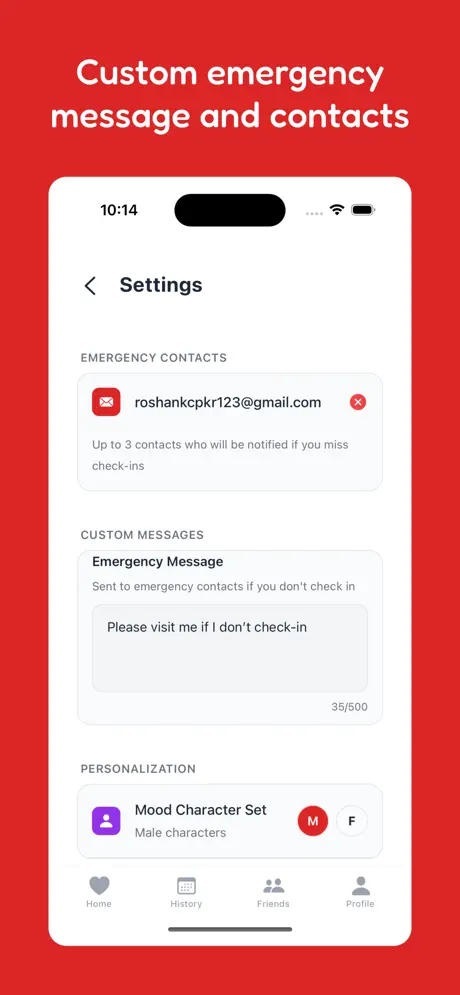
Emergency Contacts
Email addresses of people to contact if you go silent.
What Friends See
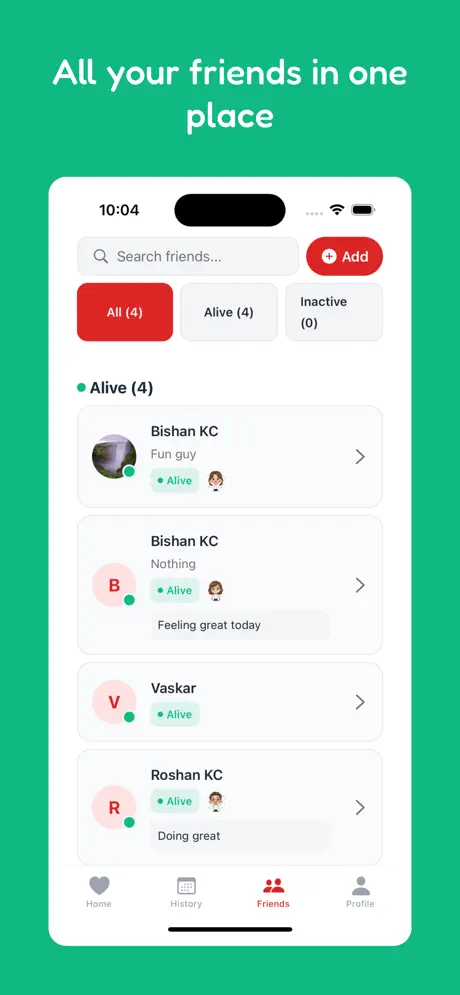
Connected friends can see:
- Your status: "Alive" or "Inactive"
- Your current streak number
- Your profile (name, avatar, bio)
Friends cannot see:
- Your location
- Your check-in history (just current status)
- When exactly you checked in (just that you did today)
- Your emergency contacts list
Why This Matters
Many "safety" apps require constant GPS tracking. This creates risks: battery drain, data breaches, controlling relationships misusing location data. We believe safety doesn't require surveillance.
Are You Alive? proves you can provide peace of mind with minimal data. Your family knows you're okay without knowing where you are.
The Surveillance Paradox: Why More Data Doesn't Mean More Safety
In the modern safety industry, there is a dangerous assumption: that more data equals more safety. Companies compete to offer "hyper-accurate" GPS tracking, "real-time" movement alerts, and "comprehensive" activity logs. This has led to what we call the **Surveillance Paradox.**
While these features promise peace of mind, they often deliver the opposite. Constant monitoring creates a baseline of anxiety for the traveler (who feels watched) and the monitor (who feels the need to watch). More importantly, large datasets of precise location history are high-value targets for hackers and bad actors. By collecting everything, these apps inadvertently create a digital roadmap to your most private moments.
Privacy is the foundation of true security.
Privacy by Design: Our Ethical Engineering Framework
Are You Alive? was built on the principle of **Privacy by Design.** This means that privacy wasn't an "add-on" or a legal requirement we had to meet; it was the starting point for every line of code. Our engineering framework is guided by three ethical pillars:
- Purpose Limitation: We only collect data that is strictly necessary for the "Are You Alive?" check-in.
- Data Minimization: If a feature can work with less data, we rewrite it to use less data.
- User Sovereignty: You have absolute control over who sees your status and when your data is deleted.
Minimalism as a Security Strategy: The Power of Less Data
Every piece of data we *don't* collect is a piece of data that can't be stolen, misused, or leaked. This "Data Minimalism" is our most powerful security strategy.
By choosing not to use GPS, we eliminate the risk of "Location Leakage." By choosing not to store movement patterns, we eliminate the risk of "Routine Profiling." Our database is intentionally "boring" to a hacker. It contains timestamps and status flags—vital for your safety, but useless for those looking to exploit your personal life.
Minimal data, maximum peace of mind.
The Risks of Constant GPS Tracking
Why are we so adamant about avoiding GPS? Because the risks often outweigh the rewards:
- Battery Anxiety: GPS is a primary driver of battery drain. A dead phone is the ultimate safety risk—if your phone is dead, you can't call for help or check in.
- Relationship Misuse: Location tracking is frequently misused in controlling or abusive relationships. "Are You Alive?" prevents this by design.
- Psychological Burden: Knowing someone knows *exactly* where you are at all times changes how you move through the world. It erodes the sense of adventure and independence that travel and solo living are supposed to provide.
Anonymity and Identity: How We Protect Your Digital Self
We prioritize pseudonymity. You can use any username and avatar you like. While we require an email for account recovery and emergency alerts, we don't cross-reference this with other social networks or sell it to "Identity Resolution" services.
Your "Are You Alive?" identity is yours to define. Within the app, the focus is entirely on the "Signal of Life"—the daily check-in—rather than the "Profile of Personhood."
Conclusion: A New Standard for Safety Apps
We believe that in the future, the most successful tech companies will be those that prove they can be trusted with *less* data, not those that gather the *most*. "Are You Alive?" is leading the way in this new era of Ethical Safety. You deserve to be safe, and you deserve to be private. With us, you never have to choose between the two.
FAQ
Can I delete my data?
Yes. Go to Settings → Account → Delete Account. This is a "destructive deletion"—we remove everything from our active databases and backup logs according to our retention policy. There is no "archived" copy of your history.
Is my data encrypted?
Yes. We use industry-standard TLS encryption for all data in transit, and your password is salted and hashed using Argon2, one of the most secure hashing algorithms available today.
Do you work with law enforcement?
We comply with valid legal requests (like subpoenas). However, because we don't collect GPS data or movement history, we simply don't have most of the information law enforcement typically looks for in surveillance cases.
What is your business model?
We don't sell data. We are funded by the passion of our community and may offer premium features in the future, but the core "Safety Net" will always be free and private.
How long do you keep check-in history?
We keep only what is necessary to maintain your current streak and basic history visualization within the app. Older logs are periodically purged to maintain data minimalism.
The Future of Privacy: Towards Zero-Knowledge Safety
As technology evolves, so does our commitment to privacy. We are currently researching "Zero-Knowledge Proofs" as a way to verify check-ins without even the server knowing who the user is. Imagine a system where your safety net is cryptographically guaranteed, yet even the developers of "Are You Alive?" cannot see your activity.
This is the future of digital safety—one where human connection and technical security are perfectly balanced. By choosing "Are You Alive?", you aren't just choosing an app; you're joining a movement that believes privacy is a fundamental human right, even—and especially—when it comes to your safety.