Are You Alive? vs Life360: Which Is Better?
A detailed comparison of two different approaches to family safety and accountability.
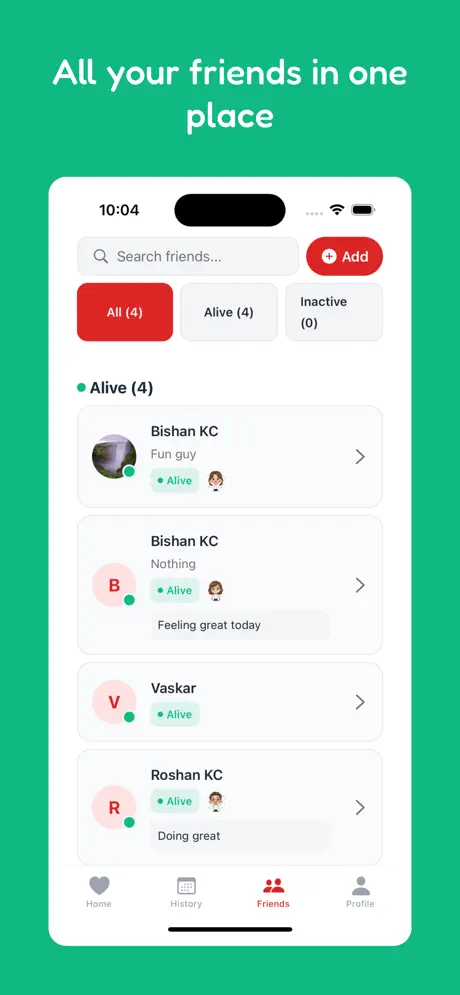
Quick Summary
Choose Are You Alive? If:
- You value privacy over constant tracking
- You want free, no-subscription safety
- You need simple daily accountability
- You're a solo traveler or adult child
Choose Life360 If:
- You need real-time location tracking
- You're tracking young children
- You want driving safety features
- You don't mind GPS privacy tradeoffs
Feature-by-Feature Comparison
| Feature | Are You Alive? | Life360 |
|---|---|---|
| Price | Free forever | Free tier + Paid plans ($8-25/mo) |
| GPS Tracking | None required | Constant real-time tracking |
| Privacy | High - no location data | Low - continuous location sharing |
| Battery Usage | Minimal | High (GPS drain) |
| Check-In Type | Manual daily tap | Automatic location pings |
| Emergency Alerts | Email after 1-3 days | SOS button (paid feature) |
| Friend Limit | Unlimited | Limited on free tier |
| Target Audience | Adults, travelers, elderly | Families with children |
| Intent | Wellness accountability | Location surveillance |
Privacy: The Key Difference
The fundamental difference between these apps is their approach to privacy:
- Life360 tracks your exact location continuously. Every place you go is logged and shared with your circle. This has led to concerns about surveillance, especially for teens and adults who feel their autonomy is compromised.
- Are You Alive? never tracks your location. It only knows whether you've checked in today or not—nothing more. This respects your privacy while still providing accountability.
Use Case Differences
Life360 Is Better For:
- Parents tracking young children's locations
- Families who want to see where everyone is in real-time
- Monitoring teen drivers (crash detection, speed alerts)
- Finding lost phones
Are You Alive? Is Better For:
- Solo travelers who want family to know they're safe
- Adults who value privacy but want accountability
- Elderly parents living alone
- Remote workers building daily wellness habits
- Anyone who finds constant tracking uncomfortable
Pricing Comparison
Are You Alive?
All features included, forever
- Daily check-ins
- Unlimited friends
- Emergency contacts
- Streak tracking
- Push notifications
Life360
Tiered pricing model
- Basic location (free)
- SOS alerts (paid)
- Driver reports (paid)
- Roadside assistance (paid)
- ID theft protection (paid)
Our Verdict
Life360 and Are You Alive? serve different purposes.Life360 is a surveillance tool—great for parents of young children who need to know exactly where they are. Are You Alive? is an accountability tool—perfect for adults who want to maintain connection without sacrificing privacy.
If constant location tracking feels invasive to you (or the person you're tracking), Are You Alive? offers a more respectful alternative. One daily check-in provides peace of mind without the "Big Brother" feeling.
The Hidden Cost of "Free" GPS Tracking
When an app offers continuous real-time GPS tracking for free, it's important to ask how they sustain their business. In many cases, the "product" is actually your location data. Life360 has faced significant scrutiny in the past regarding how they package and sell user movement history to third-party data aggregators.
At **Are You Alive?**, our business model is simple: we don't have one that involves your data. By choosing a manual check-in system, we eliminate the need to collect, store, or protect sensitive GPS trails. This approach isn't just better for your privacy; it's a fundamental rejection of the "surveillance capitalism" model.
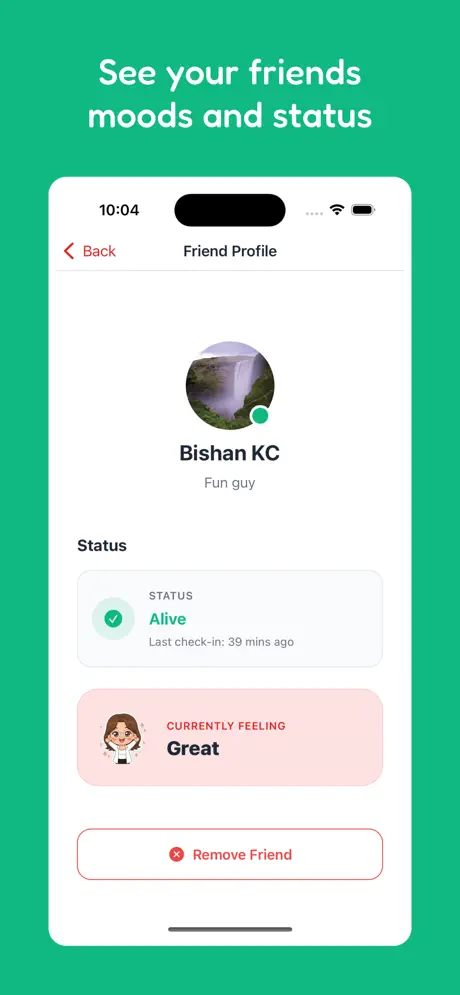
Privacy-first safety means knowing someone is okay without knowing exactly where they are.
Autonomy vs. Surveillance: The Psychological Impact
Constant tracking can have a profound impact on family dynamics and personal psychology. For teenagers, it can inhibit the development of independence and risk-management skills. For adults, it can create a feeling of "tethered" existence—where one is never truly alone or autonomous.
**Are You Alive?** promotes "Active Accountability." Instead of being tracked like a tagged animal, you make a conscious choice to check in. This builds a culture of trust rather than a culture of surveillance. It shifts the focus from "Where are you?" to "Are you okay?"
Battery Efficiency and Device Longevity
Continuous GPS usage is one of the most resource-intensive tasks a smartphone can perform. Life360 users often complain about rapid battery drain, which can ironically lead to a *decrease* in safety if a phone dies in a critical moment.
Because **Are You Alive?** only requires a few seconds of activity once a day, its impact on your battery is effectively zero. Your device stays charged longer, providing more reliability for actual emergency calls or navigation when you truly need them.
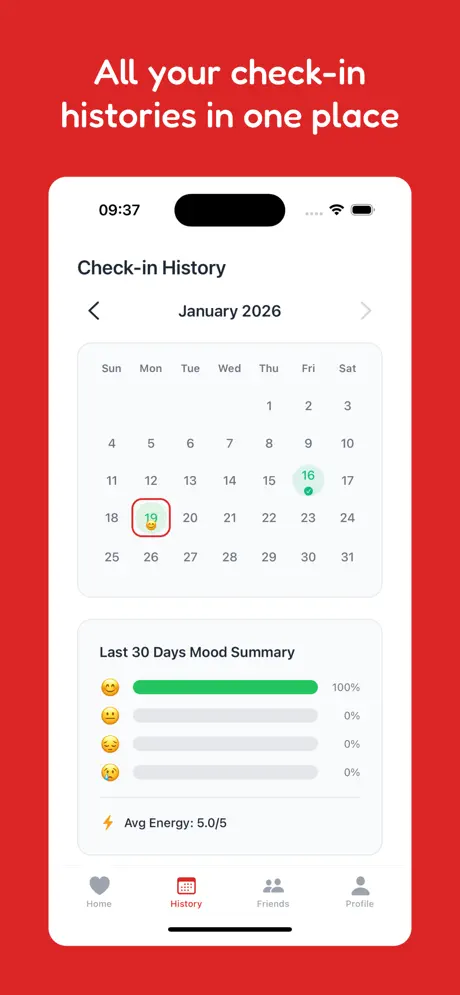
Check-in history provides peace of mind through patterns, not pings.
Scenario Analysis: When Life360 Fails
GPS tracking is surprisingly fragile. It fails in deep canyons, stone buildings, underground subways, and areas with poor satellite visibility. In these scenarios, Life360 may show a "last seen" location that is hours old, causing unnecessary panic for family members.
**Are You Alive?** bypasses these technical limitations. As long as you can find a few seconds of signal (Cellular or Wi-Fi) at any point during your 24-hour window, you can confirm your safety. It is a more robust, low-tech solution for a high-stakes problem.
Cost Analysis over 5 Years
While Life360 has a free tier, many of its most valuable safety features—like SOS alerts and roadside assistance—are locked behind a subscription that can cost up to $300 per year. Over five years, a family could spend $1,500 on a service that Are You Alive? provides for $0.
We believe that personal safety should never be a "premium" feature. By keeping our overhead low and our app simple, we can provide professional-grade accountability to everyone, regardless of their financial situation.
The Ethics of Location Sharing
Ultimately, the choice between **Are You Alive?** and Life360 is an ethical one. Do we want a society where safety is synonymous with surveillance? Or do we want a society where safety is built on mutual respect and intentional communication? We believe the latter is the only sustainable path forward for a free society.
A Final Thought on Personal Safety
Safety is not just about being "found" when something goes wrong; it's about being empowered to live your life fully. Continuous tracking can subconsciously make you feel more vulnerable, as if you cannot be safe without a digital eye watching over you. **Are You Alive?** aims to break that cycle by giving you a simple, powerful tool that reinforces your own agency.
The Verdict: Trust vs. Tracking
Life360 is a powerful tool for monitoring young children who cannot yet be trusted with full autonomy. But for adults, solo travelers, and elderly parents, **Are You Alive?** is the superior choice. It provides the same essential peace of mind while protecting your privacy, your battery, and your wallet.